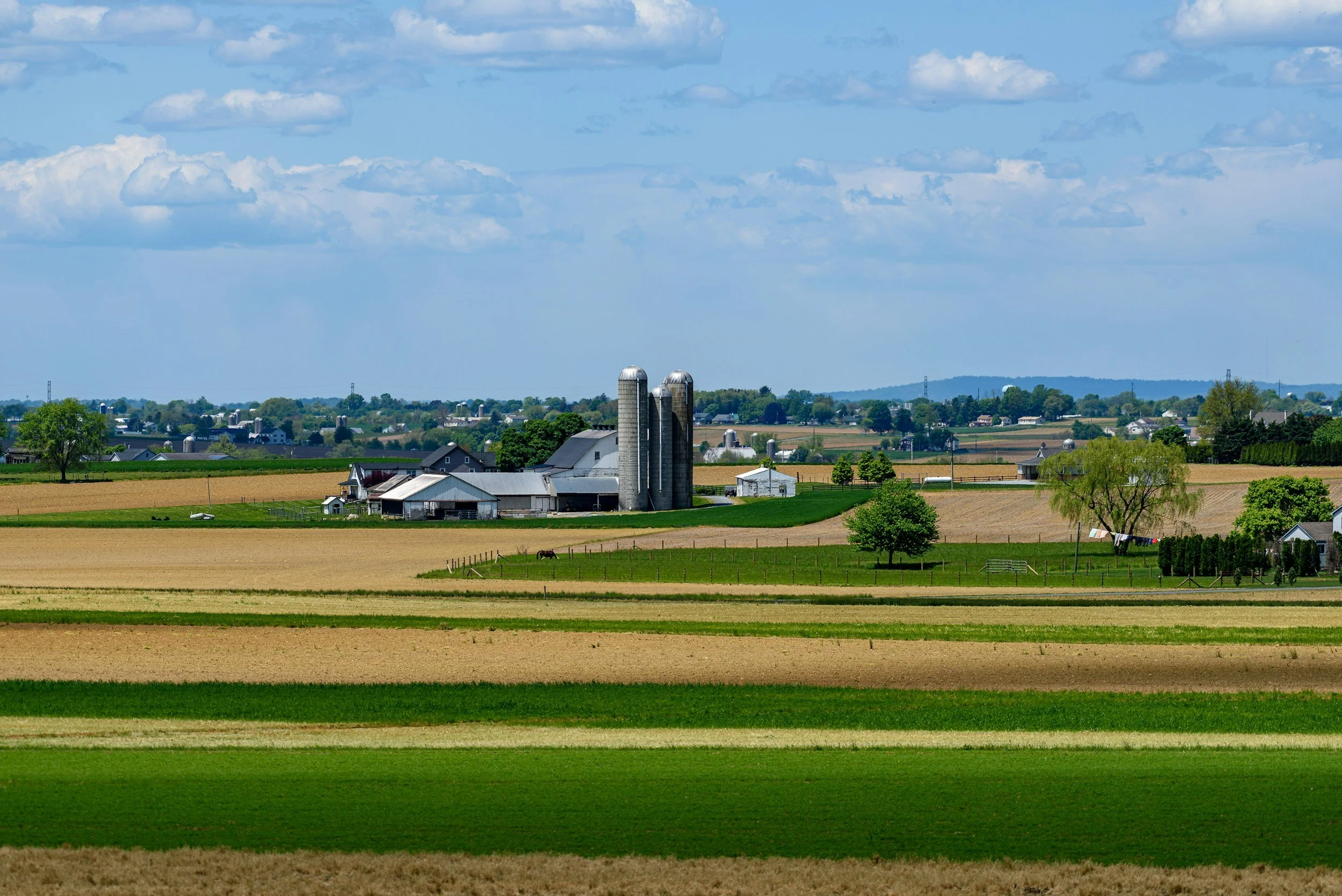
Home. When I close my eyes, I see a particular vista. It's a gently rolling hill, full of green stalks of ripening corn or peppered with grazing cows. A pair of silos splits the horizon, with the purple-blue of the Appalachian Mountains in the distance.
There are other images, too. The old brick and stone springhouse down the road from my parent's house, standing in quiet watch over the spring-fed pond, which my aunt perfectly captured in a painting for our wedding.
The once-white sheep barn that stood at the end of my childhood driveway, surrounded by a graying fence, the sky awash with the pale pink and gold of sunrise.
Home, for me, has always been deeply rooted in a place. I know I'm unique in this way from many of my peers, whose childhoods and adulthoods have been punctuated by moves and goodbyes. I live in the small community that nurtured my parents and my grandparents. I can see my mother's childhood home from my office’s upstairs windows. It's not quite so small as to know everyone, but there are roots here, and it isn't hard to find someone who knows me—or my parents and grandparents.
As I've gotten older, I continue to see what a gift this is. As we shifted communities several times early in our marriage, I longed for rootedness. I longed for neighbors that knew me. I longed for an invested community and relationships that would endure. Part of that is my nature, but part of it is because of the place (and the people in it) that nurtured me.
Growing up, we knew our neighbors. My dad would help our elderly neighbor (the one with the sheep barn) herd wayward (read: stubborn) sheep back into the confines of the fence. With every major snowstorm, we would trek across the street to shovel out another elderly widow, while, in the days before the driveway was paved, our next door neighbor plowed us out with his iconic John Deere tractor. She would appear with a plastic grocery bag with a pie or ice cream or some other treat to say thank you. We baked him chocolate chip cookies.
It's sounds idyllic, I know. And in many ways, maybe it is. But it also isn't perfect. Tight knit communities can also run the risk of being suspicious of outsiders or making it hard for newcomers to break into its fold. A community where many people are born, live, and die with limited experience outside of their familiar community can create an echo chamber or insulated view of the world.
Our place always forms us. I would argue that it is an integral part of our spiritual formation—and one we easily overlook. It shapes what we love, what we treasure, what we assume about the world. It influences our gut-level beliefs about what is “normal” or good. It weaves around us the narratives that guide how we live and orient ourselves in the world and towards other people. This formation can be a gift. It can also have its shadow side, particularly when we don't take the time to reflect on how exactly it is forming us.
This humble self-reflection, I believe, is the key. I've had to reflect on my place as I've grown—and I'm sure have only more reflecting to come. To embrace and celebrate the gifts. To see the ways I've been formed that are not inherently good or bad but aren't specifically tied to my life as a Christian. To recognize and disentangle myself from the ways my place doesn't shape me in the way of Jesus.
Because we are all from a place. This is a gift of God. But as good as those places can be—as followers of Jesus, home is yet a place we have truly to see.
Can These Dry Bones Live?
Every year, spring is a marvel to me.
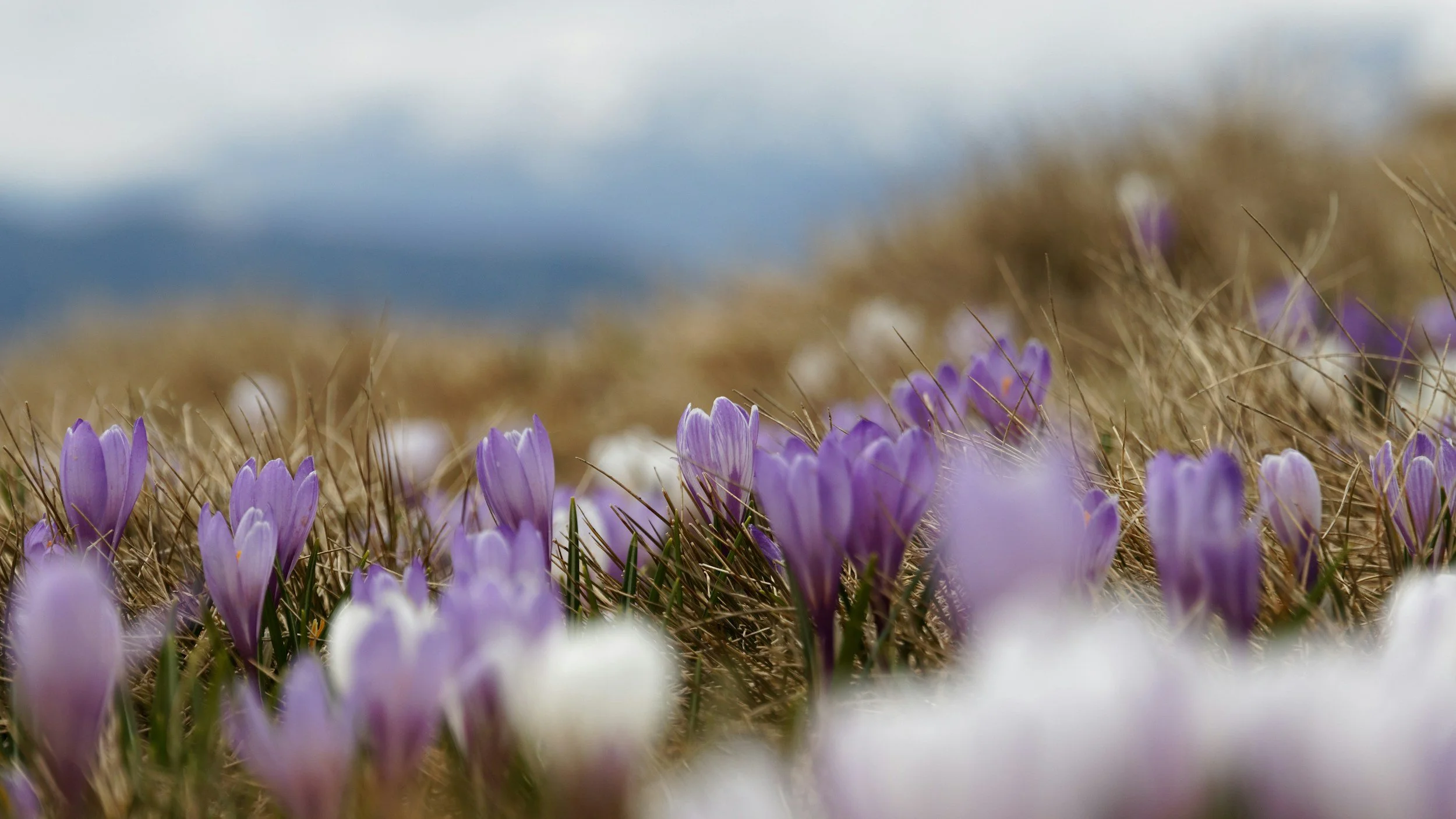
I will never get over (Lord, may I never get over) the magic of the discovery of those first peeking shoots of crocuses and daffodils, bravely defying the last clutches of winter. Or the moment when you crest a hill on a country road and realize the fields are finally green again, and not just any green but rather the brilliant, mesmerizing green of new growth. Or the day you walk outside to see, seemingly overnight, the trees have burst into bloom, hazy with billowy branches in shades of pink and white.
As I meander through our yard, inspecting the fresh flush of growth on the raspberries my children wept over last fall, convinced they were dead, it’s as if all of creation preaches resurrection.
It’s a rhythm my soul craves year after year—that embodied assurance that the gray, harsh, emptiness of winter will never have the last say.
This year, as I’ve listened to the liturgy of spring, my mind kept being drawn to a passage I love in Ezekiel (yes, friends, Ezekiel—time for the Bible nerd in me to say hello).
In Ezekiel chapter 37, God shows Ezekiel a valley littered with dry bones. What a gruesome sight that must have been. What horror—a landscape of skeletal remnants of brothers and sisters, fathers and mothers, friends and neighbors all claimed by death. As he looks over the scene, God asks Ezekiel, “Can these dry bones live?”
I’ve always found it interesting that God asks Ezekiel this question. In my own life, I find I’m the one asking this question. Lord, can this relationship be salvaged? Can this heartache be healed or wrong remedied? Will truth ever emerge into the light? Will peace ever be restored? Lord, can justice be found? Do you see the ways you are misrepresented? Will you vindicate your character and purify your people? Lord, how long must we wait for Your Kingdom to come?
When I stop to consider them, I realize they all boil down to the same core question of my heart: is there still reason to hold on to the hope that all will be made well? It’s a question of resurrection. Can these dry bones live? Or is it too late?
When God asks this question, it feels like an invitation. It’s as if he beckons Ezekiel (or you and me, my friend) to lean in close. Are you watching Me? Do you still believe I can do this?
Ezekiel answers in the most perfect (and, to me, amusing) way: “You know, Lord.” I can imagine his hands thrown up in admission to his own ignorance or powerlessness. Maybe he’s reached the point in his grief over the destruction of his people that he’s out of answers and theories. I certainly can’t do anything about these bones, but if anyone can, it’s You. You know.
Then, Ezekiel gets to watch (and is invited into the process) of these dry bones being joined back together, bone by bone, ligament by ligament, until, at the climactic moment, God breathes the spirit of life back into what was once dead and Ezekiel sees resurrection before his eyes.
There has been resurrection before my eyes over these last several weeks of spring. But it isn’t only reserved for the changing of the seasons or ancient Bible stories. And it isn’t only something in the future. God graciously allows us to see many smaller “resurrections” in our here and now lives.
The God we worship is always about the work of resurrection. It is a fixed truth in a chaotic, bone-littered world. He is always the God who brings life out of dead (or seemingly dead) things.
What is that piece of your life or our world in this season that feels like a valley of dry bones? Can you hear His invitation: dear child, can these dry bones live?
As I close my eyes and imagine God asking me this question, He leans in, with a twinkle in His eyes, urging me towards joy and peace in the midst of my sorrow and anxiety. It’s as if He can’t wait to get started. I’m still the resurrecting God. I delight in bringing life to death, beauty from ashes, joy from mourning, delight from despair. Come see what I can do.
Great Is "My" Faithfulness?
We started singing hymns to our kids when they were infants. There’s a comfort in those old words and tunes, and they’ve offered me a bit more mental and spiritual stimulation than yet another round of “Twinkle, Twinkle Little Star” when I inevitably get asked for “one more song, Mommy.”
It’s no wonder, then, that the lyrics of these hymns seeped into the minds and memories of my children early. The first time I heard our oldest daughter singing along to “Great is Thy Faithfulness” in her most grown up toddler voice, it was all I could do to keep singing through my tears. It’s cute to hear them sing the little Sunday school ditties of my childhood or burst out with a rendition of “Let It Go.” But get one of those children of mine singing an old hymn, rich in theology and promise—and it undoes me. They don’t begin to grasp the truth they’re singing about:
Great is Thy Faithfulness
O God, My Father
There is no shadow of turning with Thee.
Thou changest not, Thy compassions, they fail not.
As Thou hast been, Thou forever will be.
Great is Thy faithfulness!
Great is Thy faithfulness!
Morning by morning new mercies I see.
All I have needed, Thy hand hath provided.
Great is Thy faithfulness, Lord unto me.
Unaccustomed to the archaic formal language, my children usually refer to this hymn confidently as “Great Is My Faithfulness.” The first time I heard them call it this, I chuckled—and then inwardly groaned.
For them, it’s a simple stumble over old-fashioned language. For the rest of us, we would call this mistake a Freudian slip. It reveals a hidden belief we’re not even fully conscious of.
“Great is my faithfulness”—isn’t this too often my perception of reality? Some combination of my personality and early spiritual formation shaped me to focus obsessively on my own faithfulness. Am I doing enough? Am I trying hard enough? Am I faithful enough?
I’ve asked this question in seasons of grief and uncertainty. I’ve asked it through the fog of depression and when the feelings in my soul grow dim. I’ve asked it when life feels like a survival-marathon, and I know God is with me but can’t quite see His face clearly.
It’s a question that leaves me feeling anxious and overwhelmed, knowing that my (misguided) attempts at spiritual perfectionism continue to prove inadequate.
Over and over, I’ve come to realize that if the outcome of this following-Jesus enterprise rests on my own faithfulness, I am doomed. I can never try hard enough, never be steady enough.
But if it actually rests in the faithfulness of God towards me? Ah—there is a safe place to land in the midst of the shifting uncertainties of life. My faithfulness can be fleeting. God’s faithfulness towards me is as steady and sure as the sunrise each morning. He is faithful, even when I am not. My questions and doubts do not frighten Him, and His love never falters, even when mine falls short for the thousandth time. He is the Faithful One. My faithfulness is only ever a shadowy response to His.
What good news this invitation is, my friends, to turn my gaze towards the gracious God who is ever-turned towards me with His faithful, compassionate, unchanging love. It’s a place to rest, a place to exhale, a place to give thanks.
My faithfulness is nothing to sing about. But God’s? That melody will never grow old.
The Practice of Paying Attention
I remember how I would pause with my morning coffee. I wrapped my hands around the body of my mug, the curve of the handle the perfect size through which to lace my fingers. I noticed the smooth pottery, the way it felt as the warmth pressed into my hands on the crisp morning. I watched the lazy swirl of steam escaping in curling wisps into the air. I felt my feet resting on the floor and considered the often-overlooked feeling of my feet pressing on the carpet and the floor pushing back, holding me in place. The wooden chair was hard, standard dormitory issue, but it too kept me in place.

I sat, paying attention, rooted, just for a moment, in physical space and time. Inhale—the feeling of my chest swelling with air. Exhale—the release, my shoulders sinking down, down, down, releasing a breath’s worth of tension. This is what it feels like to be alive, I thought. I am here. I am alive. And, for one tangible moment, that was enough.
At the time, I was a college senior and weighed down with my first major experience with depression. I walked through the days in a fog, mechanically going to class, eating meals (with varying degrees of dedication), and attending rehearsals for the small music ministry I was directing. I kept moving, but just barely. When I think back, my memories are hazy. My thoughts then were hazy too, as my mind suffocated under feelings of desperation, anguish, and despair. I was trapped in my mind, unable to break free, kept in a foggy prison. It was in this season, ironically enough, that I first learned the value of paying attention.
You don’t have to be depressed to struggle to stay in tune with your physical surroundings. Our culture easily pushes us forward at a rapid pace. Most of my time these days is spent as a stay at home mom, and yet that seems to only exacerbate my hamster wheel-like attempts to multitask. Engaging with my kids, keeping track of family appointments and childcare needs, checking email on my phone, cooking dinner, finding pockets of time to connect with friends, before and after school drop offs, planning lessons for church, writing work—I swirl on, trying to juggle it all, trying to keep it all afloat.
Lately, this has brought me back to that practice of paying attention. Or attending. At its root in Latin, the word “attend” literally means “to stretch toward.” I’ve needed to practice the discipline of attending in the midst of depression, because it pulls me from my dark thoughts and keeps me stretching toward the tangible, broken, beautiful world around me. I’ve needed it in the midst of pain because even in the midst of suffering there is space for sips of delight. I’ve needed it when life is more stable, and I’m inclined to rush past joy to keep up with the frenetic pace. I need it now—when daily I’m reminded that we live in a world that is all to often chaotic and unjust. I become like one of the plants on my windowsill, turning, bending, stretching toward the Light.
There’s so much I miss, so much I rush past on normal days. The smell of my shampoo in the shower, the texture of my husband’s shirt against my cheek, the way the sun shimmers on my daughter’s wispy strawberry-blonde hair. I can’t remember what the cashier looked like at the grocery store, or even where the smile lines are on my parents’ faces (though I know they’re there). So much color, such a feast, so much vibrant life. It’s there if I pause long enough to stretch toward it. It’s there if I have eyes to see.
Sometimes, I need to simply stop and pay attention. I notice the sensation of the breeze kissing my cheek, of the way the sun warms my face. I stop to look my children in the eyes and see their delight, stoop down to see the world as they do, slow my pace to match theirs. I listen to the sound of leaves scuttling along the ground in the wind, the sound of a unique birdsong, the sound of the neighbor kids yelling back and forth to each other in the backyard.
This practice of attending is one my soul desperately needs when I’m under the cloud of depression, the twist of anxiety, or the flurry of stress. It doesn’t permanently fix my mental health struggles, it doesn’t solve the world’s problems, and it certainly doesn’t remove tasks from my to-do list, but it does keep me rooted in the dappled beauty of the life I’m living.
Attending, truly, is a spiritual practice, a discipline. It is a quiet, mostly hidden discipline, that helps me to heed Frederick Buechner’s wise advice to “listen to your life.” It trains my vision on the beauty of this world, in the midst of so much that is broken. It helps me keep watch for the simple, tangible ways God appears in the seemingly mundane moments of my life. It opens my eyes, and it makes space in my spirit to give thanks and to pray.
Each pause, each breath, each thing I create space to truly experience grows roots within me, keeping me in the present moment, keeping me in tune with where He is (or may be) moving. It helps me remember: I am here. I am alive. God is present with me. And for this fleeting moment, that is enough.
Consider the Birds
I’ve been spending more time lately peering out my window at the birds.
We have a feeder nestled among the flowers and shrubs outside the bay window of our living room. I’ve had the perfect spot inside, during the dregs of late winter, to watch the comings and goings of its visitors. We have the usual collection of backyard birds—mostly house finches and cardinals of late, with a few dark-eyed juncos hopping about on the ground cleaning the seed they’ve spilled—but they’ve been the perfect companions for my window musings.
I’ve been taking Jesus’s invitation to “consider the birds” more seriously these days, you see.
There has been plenty of heartache and anxiety to go around—in my community, our country, and our world. And, if I’m honest, when I face it all head on, I’m overwhelmed and paralyzed by my own powerlessness.
I can’t keep a heart beating or remedy the grief of friends forced to say goodbye to a husband and father far too soon. I can’t stop the overreach of the power-hungry or enact justice for those who are wronged. I cannot bring truth to light when it’s hidden or check the actions of the arrogant. There are vulnerable people I cannot protect, funding I cannot come close to replacing, and lies I cannot reason away.
So, I’ve been watching the birds.
They do not labor—my Heavenly Father feeds them. Not one of them falls to the ground, Jesus promised, without my Heavenly Father seeing—and of how much more value are we? (See Matthew 6 and 10.)
I watch how they flit about, jumping from this branch to that one. I watch as they slowly snack on seed. They are in no hurry. They are so fragile—but they seem unconsumed by it. I watch how, in this moment, the gracious provision of food by their Creator comes from my hand.
I listen as they greet the dawn with song, bursting forth in praise for a new day. They cannot help but sing. They know other way.
I stopped with my daughter to watch them soar high above us, suspended so perfectly in the wind that they floated with still wings. Do they ever fly just for the joy of it?
If such tiny, commonplace creatures are seen by God, if He notices when one falls—and they do fall—how much more must His eye be turned to us, the ones made in His image? How much more so should my eyes be turned, should my heart be moved, by men and women that God, the Father Almighty, sees and loves?
Do not be anxious. Consider the birds. And learn from them.
This does not “fix” anything. But I don’t think it ever was intended to be about “fixing.” It is, though, about reorienting myself, about finding that still point in a chaotic and rapidly moving world. It is a deep inhale and exhale of dependence and trust that allow me to reenter and engage with life looking for what I can offer and influence (in the bird analogy—where can I hang my bird feeders?). It is a reminder to look for and relish joy and delight—for they are here. It keeps me rooted in the place and time God has planted me.
I invite you, friend, to consider the birds. Invite Jesus into that space and incline your ears for what He may speak to you through these feathered friends.
Quisque iaculis facilisis lacinia. Mauris euismod pellentesque tellus sit amet mollis.