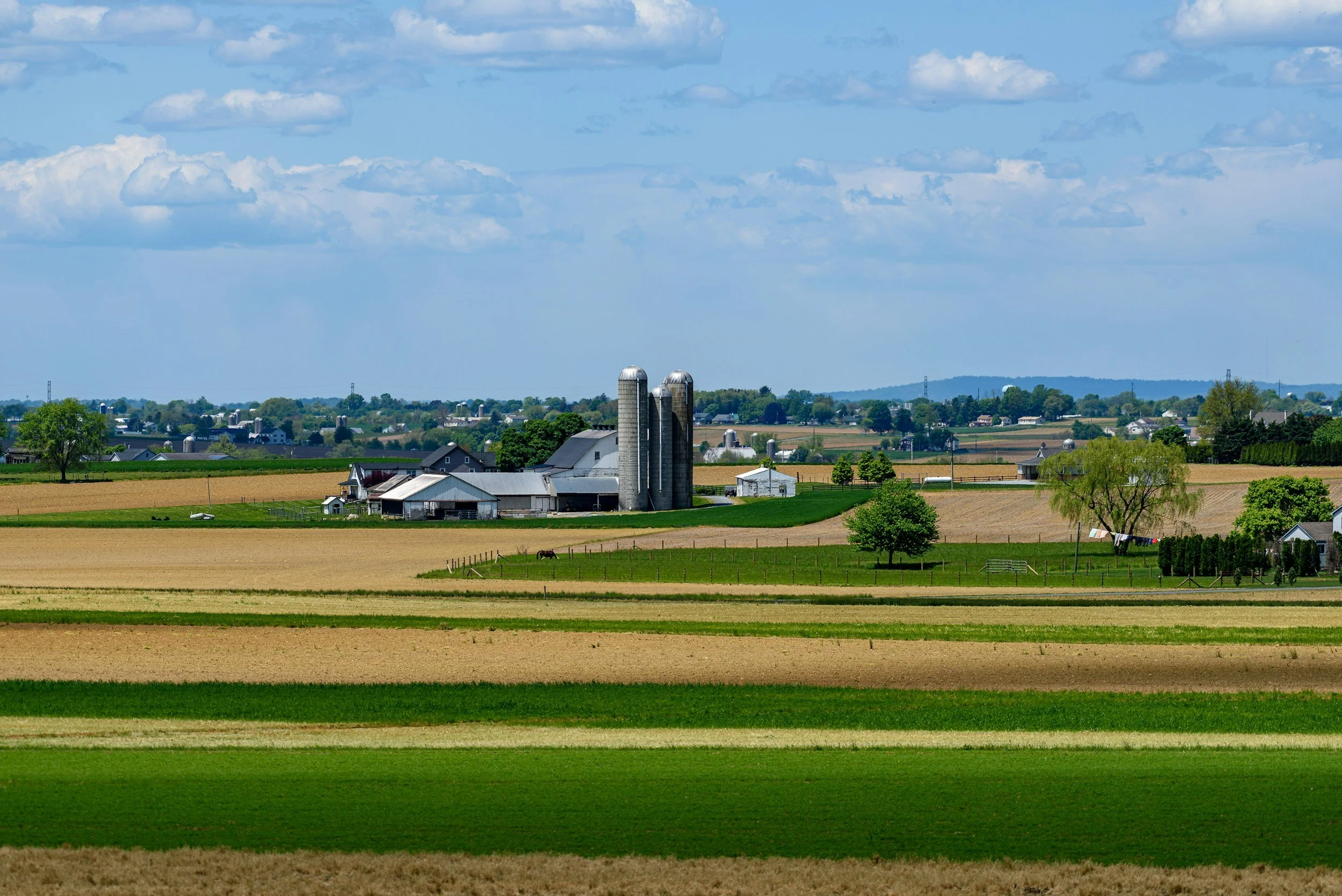
Home. When I close my eyes, I see a particular vista. It's a gently rolling hill, full of green stalks of ripening corn or peppered with grazing cows. A pair of silos splits the horizon, with the purple-blue of the Appalachian Mountains in the distance.
There are other images, too. The old brick and stone springhouse down the road from my parent's house, standing in quiet watch over the spring-fed pond, which my aunt perfectly captured in a painting for our wedding.
The once-white sheep barn that stood at the end of my childhood driveway, surrounded by a graying fence, the sky awash with the pale pink and gold of sunrise.
Home, for me, has always been deeply rooted in a place. I know I'm unique in this way from many of my peers, whose childhoods and adulthoods have been punctuated by moves and goodbyes. I live in the small community that nurtured my parents and my grandparents. I can see my mother's childhood home from my office’s upstairs windows. It's not quite so small as to know everyone, but there are roots here, and it isn't hard to find someone who knows me—or my parents and grandparents.
As I've gotten older, I continue to see what a gift this is. As we shifted communities several times early in our marriage, I longed for rootedness. I longed for neighbors that knew me. I longed for an invested community and relationships that would endure. Part of that is my nature, but part of it is because of the place (and the people in it) that nurtured me.
Growing up, we knew our neighbors. My dad would help our elderly neighbor (the one with the sheep barn) herd wayward (read: stubborn) sheep back into the confines of the fence. With every major snowstorm, we would trek across the street to shovel out another elderly widow, while, in the days before the driveway was paved, our next door neighbor plowed us out with his iconic John Deere tractor. She would appear with a plastic grocery bag with a pie or ice cream or some other treat to say thank you. We baked him chocolate chip cookies.
It's sounds idyllic, I know. And in many ways, maybe it is. But it also isn't perfect. Tight knit communities can also run the risk of being suspicious of outsiders or making it hard for newcomers to break into its fold. A community where many people are born, live, and die with limited experience outside of their familiar community can create an echo chamber or insulated view of the world.
Our place always forms us. I would argue that it is an integral part of our spiritual formation—and one we easily overlook. It shapes what we love, what we treasure, what we assume about the world. It influences our gut-level beliefs about what is “normal” or good. It weaves around us the narratives that guide how we live and orient ourselves in the world and towards other people. This formation can be a gift. It can also have its shadow side, particularly when we don't take the time to reflect on how exactly it is forming us.
This humble self-reflection, I believe, is the key. I've had to reflect on my place as I've grown—and I'm sure have only more reflecting to come. To embrace and celebrate the gifts. To see the ways I've been formed that are not inherently good or bad but aren't specifically tied to my life as a Christian. To recognize and disentangle myself from the ways my place doesn't shape me in the way of Jesus.
Because we are all from a place. This is a gift of God. But as good as those places can be—as followers of Jesus, home is yet a place we have truly to see.
Street Address
City, State, Zip
Phone Number
every day discipleship. every day grace.
Summary Block
