They used a real baby for baby Jesus. I didn’t know it was coming. Most people didn’t, it seems. But Mary walked back out onto the church stage with a live baby nestled in her arms—none of the plastic baby doll stuff that year. He was wrapped in a neon green blanket. It stood out like a swoosh of highlighter against the browns and grays of the manger scene.
He squirmed as she held him, gazing up at her face. He sneezed, and her face lit up in delight. Mine did too. I could sense the mood shift behind me, like ripples through the crowded pews. We were all amazed and entranced—by a baby boy sneezing.
“I hope he doesn’t cry,” I thought. Apparently the director was reluctant to allow him his acting debut for this very reason. What if he cried? What if this music, this moving moment, was cut through by a baby’s wail? What would stage-Mary do? Try to comfort him while the shepherds processed by her straw bale? The tried and true baby-soothing bounce and sway would interrupt the Nativity tableau. And heaven forbid Mary attempt to feed her hungry boy by breastfeeding him on set.
As I caught up to my thoughts, I was horrified.
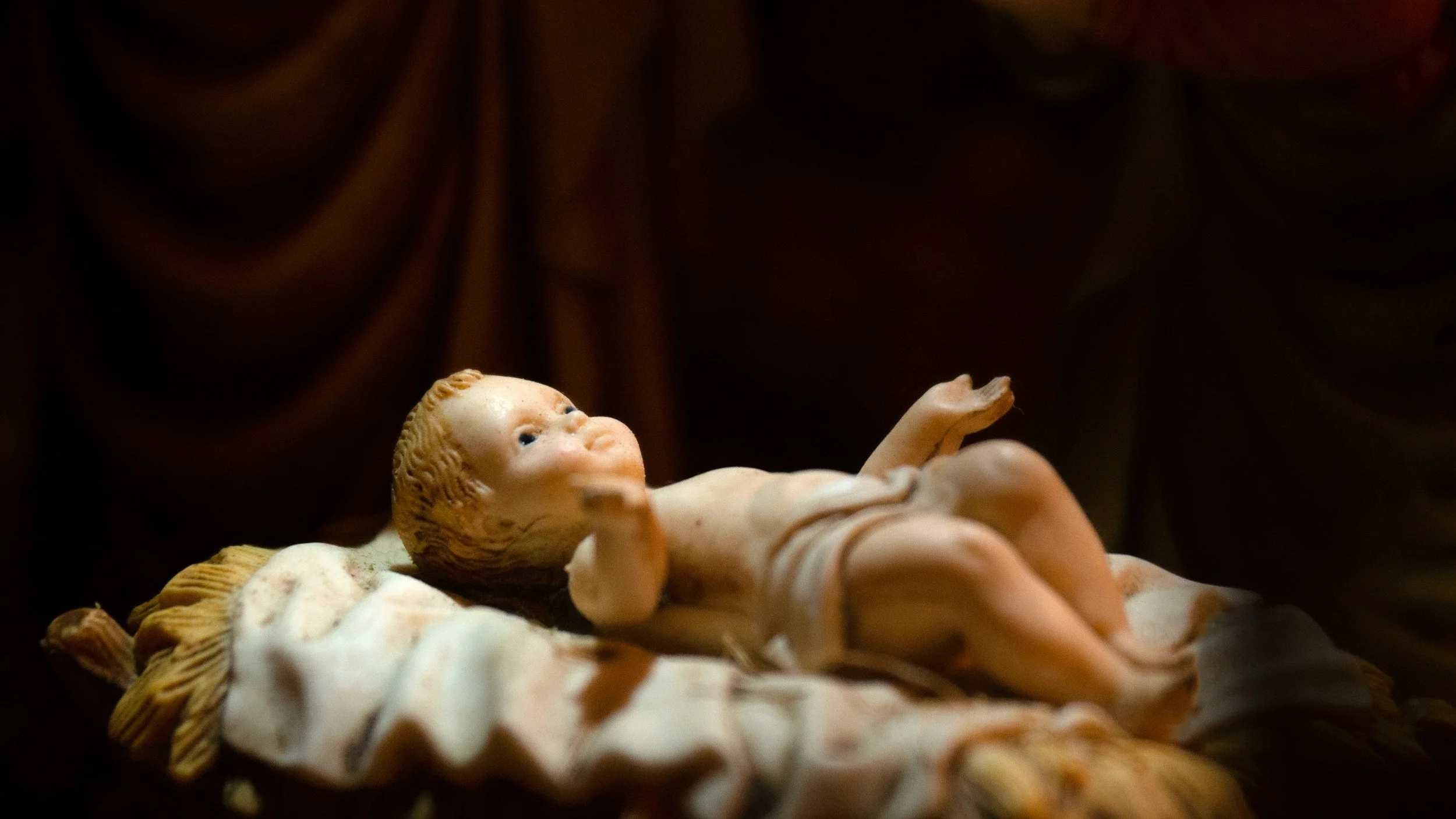
In that moment, I realized that it is much more convenient for us to have a stoic, placid, plastic grinning baby doll version of Jesus. He becomes still, unmoving, stripped of inconveniences like crying. The night was silent, right? All is calm? No crying he makes?
But the real flesh and blood Jesus was a newborn. And newborns cry—that desperate, lusty cry, for warmth, for sustenance, for comfort. It’s not a sin. It’s an expression of need and dependence. Of course Jesus cried. And young mother Mary would have struggled, as all mothers do, to find the cause. Was he hungry? Did he need his diaper changed? Was he too cold? Too warm? Was his arm bent in some strange way in his swaddle? Did he need help falling asleep? Or was he just…crying?
Here is the raw wonder of the Incarnation—a baby who cries, who has needs. The Creator of the universe, dependent on his peasant parents to discern and meet those needs. The wonder of the Incarnation—God made man, learning to nurse at his mother’s breast. God made man, with a diaper rash, with afterbirth crusty on his skin. The One who spoke galaxies into being, unable to speak, unable to express what he wants. The light of the world blinking new eyes in the light outside the womb. It’s so astounding it makes me uncomfortable.
It should make us uncomfortable, in the way that realities beyond words and comprehension usually do. The thought of the God of all stooping so low and giving up so much goes beyond what my mind can fathom. A Love so immense to compel such humility and sacrifice is not tidy or easily constrained by a pretty bow. It is beyond my ability to earn, beyond my ability to repay, beyond my ability to control. Such a love and such a God demands my awe and gratitude. It drives me to my knees in surrender as it lifts and pummels, rages and dances like the sea.
Perhaps that’s why we like plastic baby doll Jesus better—he behaves. We can hear the Christmas pageant lines and have our sweet moment—without interruption or inconvenience. We can maintain our illusions that we aren’t quite as needy or beholden as the unabashed message of the Incarnation might suggest.
The baby Jesus on stage that night didn’t cry. His squirming broke his hand free, and he reached up to Mary’s face, grabbing a fistful of her long dark hair. She laughed as she untwined it from his grasp. And I marveled.
