The Gospel According to Botox

The first time I heard the commercial I was confused. It came on in the gap between songs on the online streaming service I use—because I’m too cheap to pay for the ad-free version. The woman’s voice broke through what had been the lull of background music. She invited me to be free of the time and stress of editing holiday photos. Some sort of photo editing software, I thought. And then came the punch line.

The advertisement was for the plastic surgery division of a local medical conglomerate. “Make an appointment today for all of your Botox, implant, and enhancement needs to look great for Christmas, New Year’s, and beyond,” the woman said. They promised confidence, a better time—and of course all of that photo editing time saved.

The first time I heard it, it caught me by surprise. Every time after, it made me angry.

I know that for some people a visit to a plastic surgeon or the use of Botox injections is part of treatment for legitimate medical issues. But that was not the motivation of this advertisement. Far from it.

Here was the gospel according to Botox, the gospel according to cosmetic surgery. Joy to be found in the perfect body. Contentment in nips and tucks. Self-confidence in wrinkleless skin. The gospel that says you’ll be happy if you look different, that you’re more valuable or interesting or attractive if you match a specific definition of “beauty.” The gospel that assumes beauty is found in youth, as if there can’t be beauty in the creases etched by decades of smiles.

The ad made me angry because it preyed on a vulnerability I see in so many people—and one that I have battled myself. It’s a vulnerability based a lie. A lie that says your worth is in your appearance. A lie that says beauty is defined by body dimensions or flawless skin or a number on a scale. A lie that says achieving that ideal is more important than being healthy or finding contentment.

pexels-photo-2198524.jpeg

These lies can drive us to distraction—or despair. They make some of us embrace hunger as salvation, willing ourselves to eat less and less, starving ourselves to meet an ideal. They take some of us to the gym, spending hours fighting off calories. They drive us to all sorts of gimmicks—this new diet pill and that at-home remedy. They leave us ever insecure, ever comparing, ever hiding from another’s eyes.

We set goals, thinking that if we get to such-and-such a point, we’ll be happy and stop our efforts. But those gods are not so easily appeased. They demand more. A few more pounds. Another touch up. Inside is the same insecurity, the same doubt, the same convoluted sense of beauty and worth.

And so I sat angry at a radio advertisement. Because there is a better way. There has to be a better way.

What if, instead of buying into this faulty gospel, we encouraged people to be healthy—to eat well and exercise because their body is part of God’s good creation, the most intimate part of his world that they can steward and care for? What if, instead of a quest for elusive youth, we celebrated aging for what it does offer—wisdom, experience, a wealth of stories? What if we taught ourselves to find confidence and value in things deeper than our skin?

It is not wrong to seek to be healthy—which for some of us, yes, may mean hitting the gym or adjusting our diet. And it is not wrong to want to look good or feel comfortable in your own body. But we act on these desires not in order to achieve our worth, not to buy contentment, but from the basis of our inherent value as a child of God, as one who is loved. When we rest in who we are as the beloved, we can care for ourselves rightly—and resist the striving and abuse and obsessing driven by some cultural ideal.

The photo editing I can’t help you with. But confidence and a good time? You don’t need Botox for those.

Wrinkled Hands

I never knew her name. But I doubt I’ll forget her. She would enter the sanctuary just on time and walk to her habitual seat in the front. Her walker was left standing in the center aisle as she shuffled into the row. She was petite, and her body bowed with age. She always stood for the worship music, supported by a hand on the seat in front of her. In the dim light, I would often see her other hand raised in worship, her wrinkled fingers bent with arthritis.

Great is Thy faithfulness! Morning by morning new mercies I see. All I have needed Thy hand hath provided. Great is Thy faithfulness Lord unto me. She stood in awe, in reverence, in honor of God’s glory. Her hand lifted in tribute, in affirmation, in adoration.

wrinkled+hands.jpg

How many decades had she sung these words? What had those hands seen that now lifted in praise to her faithful God?

I never knew her name. I never knew her story. But I could imagine. No one is immune to the joys and sorrows that afflict humanity. Perhaps she’d had children or a husband. Perhaps she’d lived out her years going to bed alone. Surely she’d had her questions and her doubts, had weathered sickness and hardship and loneliness. She’d have stared down her own sin and begged God for mercy.

But surely she had also seen God enter her story. Seen him provide. Seen him comfort. Seen him transform her heart. Seen his faithfulness again and again. In better and worse. In sickness in health. In richer and poorer. All the days of her life.

So, for all she had seen, she was still here. Still standing. Still lifting up her hands in worship.

When the day comes that my hands wear the creases of age, I hope the same will be said of me. I pray age will not bear the fruit of bitterness or cynicism but rather of the fruit of joy, gentleness, and hope. I know there will be plenty of stories to tell or opinions to be voiced, but I pray all of them center on one refrain: Great is Thy faithfulness.

Best Resources for Bible Study

When people find out I’ve been to seminary, I get one of three reactions. Some people assume that a seminary degree means I suddenly have all of the answers about the Bible and faith. As much as this sentiment may flatter my pride, it is far from the truth. This is not true of me and, I would argue, is not true of even the best of biblical scholars.

Others shrug their shoulders at this information, as if asking “so what?” They are skeptical of scholarship and question what a seminary education could offer that they can’t find in their own Bible reading. They doubt that understanding more about the culture or language that gave birth to the Bible—and to our Savior—could offer any further insight into what the Bible teaches us.

I find both of these reactions to be problematic, but we can save that discussion for another time. To be brief, as we think about studying theology or the Bible, we must chart a way between these two extremes. We must learn to read and study for ourselves—prayerfully, thoughtfully, and habitually reading the whole of the Bible, not merely listening to whomever we have deemed our approved expert. You do not need to go to seminary to learn to study the Bible well for yourself. But, as we are always reading the Bible in translation and across cultures, we benefit from additional resources that help us understand things like word plays we may miss, cultural asides and assumptions that would have been understood by the Bible’s first readers (or, rather, hearers), or people and places foreign to us.

This is why I appreciate the third reaction I receive. These people don’t assume I have all the answers, but they do assume I may have something to bring to the table here and there based on my additional study. They know their own life experience and personal study are important as they seek to understand and apply God’s Word—but they are open to additional insight that may add to, clarify, or enhance it.

As is the case with most training and schooling, I left seminary not with all the answers but equipped with better resources to know where to look for answers. Today I want to share with you some of my favorite resources and tools for studying the Bible. They will help us walk in this balance between learning from the Bible itself—and receiving help from those who have been doing it much longer and more in-depth than we have. I personally find them to be well-grounded and balanced when it comes to most theological issues, and I believe them to be fairly accessible and helpful regardless of your level of biblical and theological study.

Best Resources for Bible Study.jpeg

Pen & Paper

I start here because I can’t imagine doing any sort of study without pen and paper by my side. Write down your questions, the things that stand out to you, the connections you find between different passages. Keep track of the ways you sense God speaking to you in the Scriptures or of what you’ve learned new. In the moment, it’ll be a helpful way to keep track of your thoughts, and in the future it will offer a reminder of the things you once knew but forgot and of how God has been at work in your study of His Word.

Study Bible

A good study Bible is a great foundation for Bible study. It should provide basic information on each book of the Bible (historical context, major themes, an outline, etc.) as well as footnotes throughout with tidbits about translation, culture, related passages, and more. I would recommend choosing a study Bible that is compiled by a panel of scholars and pastors, not one by merely one person.

Another helpful feature of a study Bible (though some standard Bibles also have this) is a cross reference list. You’ll see this running in parallel as you read the Bible. It’s usually a smaller-text column with Bible references. (The cross reference list in my study Bible is placed in the crease of the center binding of each page.) This list is an excellent way to find other passages of the Bible that relate to the one you’re studying. Seeing how the Bible refers to itself and is in conversation with itself will give you a fuller understanding as you study.

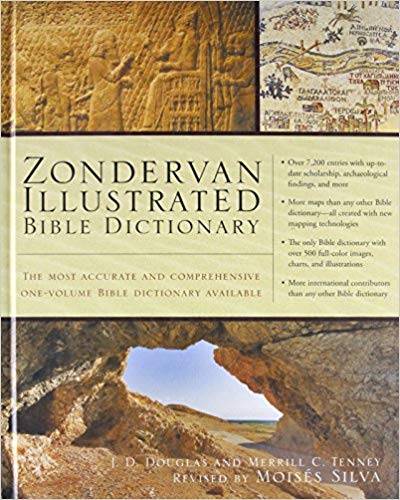
Zondervan Illustrated Bible Dictionary

This hefty book contains maps, color photos, and vivid descriptions of people, places, and cultural practices during biblical times. A Bible dictionary is an important basic tool for personal study, and there are other Bible dictionaries available that you may want to explore. (I know buying this one new may be a little investment.) But I have the Zondervan Illustrated Bible Dictionary for my own study, and I’ve found it to be a wonderful resource.

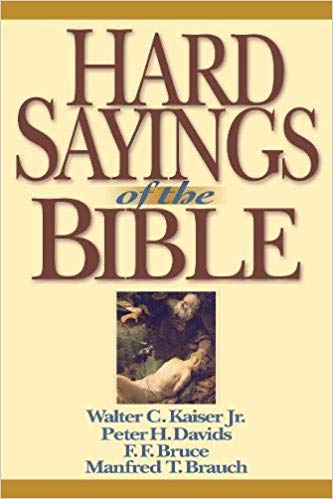
Hard Sayings of the Bible

Have you ever read a passage in the Bible that leaves you scratching your head? The logic turns you around, perhaps? Or you hear differing interpretations and don’t know what to think? Or perhaps it’s a hard-to-grasp passage about God’s wrath or justice or knowledge? Hard Sayings of the Bible is a great resource to turn to. The authors offer thoughtful yet easy to read explanations for these “hard sayings,” putting them into biblical, historical, and pastoral context. This is one I come back to again and again when I hit challenging passages.

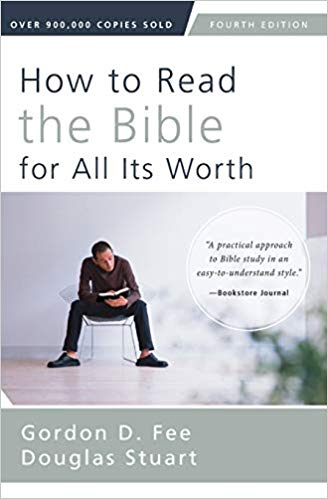
How to Read the Bible for All Its Worth

How to Read the Bible for All Its Worth will help you pay attention to biblical genres. How do we read, study, and interpret historical books as opposed to poetic ones? What should we be aware of when we read epistles, like Paul’s letters in the New Testament? Are the Gospels biographies in the sense we read now? The authors walk through each literary genre in the Bible and give specific examples of how paying attention to genre should guide our interpretation of biblical texts. And they do it in a way that’s easy to understand, even if you don’t consider yourself to be a scholar of literature or of the Bible.

A follow-up book, How to Read the Bible Book by Book, continues this approach, but through brief entries for each book of the Bible, which include some simple guidelines and suggestions for how to read, study, and interpret it well.

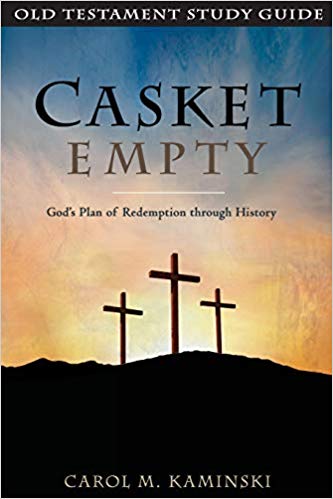
CASKET EMPTY Timeline and Study Guide

The CASKET EMPTY resources will help you put each biblical book in the context of the whole story of the Bible. Not sure how the prophets compare to stories about Abraham? Not sure how the New Testament letters fit into a historic timeline? How do the various parts of the Bible fit together? CASKET EMPTY answers these questions and more with its colorful and beautifully designed timelines for the Old and New Testaments and the accompanying study guides. This resource adds the depth of biblical context to your study by keeping you grounded within the grand story of the Bible.


These are some of my top-shelf resources for Bible study. Do you have any you would add to the list?

Waiting Without (On the Mudroom)

“When I wait for God to act in answer to my prayers, when I wait for him to break into my season of pain and unmet longing, I am given no guarantee he will act in the way I desire. The guarantees I am given and the divine promises I must rest on are of a different sort entirely.”

Advent is a season of waiting. It’s a season to embrace the tension of the “already” and “not-yet” reality. It’s a season for lingering questions and for aching hearts.

As I wrote this post for the Mudroom blog, I thought of the generations of people who waited for the Messiah to come. Were they like me, I wonder? Did they too struggle with the wait? Did they struggle as they saw God delay to act in the way they desired?

They too faced a long wait. And they too had no other anchor than God’s promises.

I’m over at the Mudroom reflecting on these promises - and on how bad I am at waiting. Head on over there to read “Waiting Without.”

header.jpg

Seven Advent Practices to Find Quiet in the Bustle

This time of year always has a sense of warmth about it for me. I love the music, the twinkling lights, the baked treats, the nights by the fire, the time with family. It feels cozy and rich in my mind’s eye. But it can also easily feel hectic or stressful. I find myself swept in the bustle, my thoughts set on getting the best deals on gifts, and how I’ll manage getting everything done on my to-do list with a toddler adventuring everywhere.

This is why I love Advent. It creates a space that tells me to stop. It resets my focus. It gives me permission to be still. It also gives me permission to admit that all is not “merry and bright.” It invites me into the dark—into mourning over the ways the brokenness of the world invades my life, my community, and my soul, into anticipation for the day yet to come when all is made right. It reminds me that it was because of this very darkness that Jesus entered the world. It reminds me that his light has shone in that darkness and regardless of what I see, regardless of the wait, that light will not be overcome.

I love the Christmas season, don’t get me wrong, but I’m realizing that the stress of the hustle and bustle is not good for my soul. As I try to resist the stress it brings, I’ve thought about some practical steps we can take to cultivate an Advent spirit and create space for stillness and reflection during this season. Though it’s by no means exhaustive, I wanted to share that list with you.

1. Use a tool for reflection. There are many wonderful tools you can use for reflection. The key with these isn’t about doing more or finding yet another routine to be distracted by. These resources are intended to serve us as we attempt to train our vision in the right direction. You can look for whatever tool will best help you and your family. Here are some that I have found helpful.

Music: At least once during the Advent season I take time to listen to Andrew Peterson’s album Behold the Lamb of God. (And I mean listen, as in lay on the couch with my eyes closed, press play, and stir only after the last note sounds.) I’ve talked before about why I find that album to be meaningful.

Devotional reading: Many organizations and churches now put out daily advent devotionals that are great. I also recommend a collection of sermons by Fleming Rutledge called Advent: The Once and Future Coming of Jesus Christ.

Jesse tree: This is something we’ve decided to start doing as our kiddo gets older. It’s an ancient concept that focuses on the lineage of Jesus. The tree begins bare, and each day an ornament is added that represents some aspect of the big-picture story of Christ’s coming. You can read a corresponding Scripture passage (or read it as a family). By Christmas Day, the tree is full of these ornaments. There are many derivations, so you can adjust the Scripture passages and the ornaments to what you desire. For example, the ornaments can be simple paper printouts that you can color—or you could make or buy your own set. You can learn more and find a recommended guide here.

2. Spend some time in the Old Testament. Advent focuses on waiting, anticipation, and longing for promises to be fulfilled. Try reading some of the Old Testament prophets each day, particularly passages looking forward to the coming of the Messiah. Sit with the long, long wait of the coming of Christ. You can cobble together your own set of readings, choose one prophet, or use a curated guide. I recently had this one recommended to me that uses the minor prophets.

advent+practices+for+quiet.jpg

3. Practice a (spiritual) discipline. At the end of the day, cutting out the time for stillness, solitude, and reflection is a discipline. As with all spiritual disciplines, it’s about intentionally engaging in a practice that creates a space for you to be formed by the Holy Spirit. Some spiritual disciplines are on-the-go or communal. But some just require us to slam on the brakes and stop. We say no to the tyranny of the urgent and make the counter-cultural decision to be still, to not do, to be quiet. This will look different for each of us. It might be a pocket of time in the morning or in the evening. It may be making a day-long retreat or setting aside a day as a family to just stay at home together. It will require discipline and it may require sacrifice—but isn’t this true of most of the good things in life?

4. Say no. This is a hard one for many of us, but it is one of the foundational ways we can build spaces of stillness into this season of the year. I’m not saying you can’t participate in any of the festivities. But do you have to go to all of those parties and cookie swaps? Do you have to participate in the children’s program and the Christmas Eve service and sing that solo? Or is it possible to say no to a few of those events? Saying no does not make you a Scrooge. It means you’re making an intentional step to clear some space.

5. Simplify. There are many aspects of this season that don’t have to be as dramatic or over-the-top as we sometimes make them. Do you really need to make twelve different types of pie or forty-six dozen Christmas cookies? Do I need to host and cook everything from scratch and make my own greenery? Sometimes instead of saying no or cutting something out completely we just need to find a way to simplify what we’re doing. Maybe you have a potluck instead of cooking everything yourself. Maybe you use more gift bags and less wrapping paper. Maybe you buy the pie or the greenery or use boxed mashed potatoes. Simple may be different—but it is not bad.

6. Take the focus off the presents. Generosity is a wonderful thing—and a biblical value. There is nothing wrong with generosity expressed in a thoughtfully chosen gift for someone you love. But all too often, Christmas presents devolve beyond generosity. We can easily become swept away by consumerism that tells us to buy more, that we need the newest gadgets, that turns all of our attention on material possessions. This sort of gift-giving or list-generating produces fruit of a very different sort. We may become envious or judgmental about those who have more disposable income than we do—or have less but spend beyond their means. We may find self-righteous pity for those who have less materially than we do. We may find seeds of greed in our heart. We may be distracted by comparison. I often hear that this season isn’t about the presents—but what practical steps do we take to make it clear that we believe this?

7. Ask an important litmus test question. Is this going to help focus me on the wonder of the coming of Christ to our world? Will it cultivate hope in my heart for his return as the glorious King? Is this going to bring me joy, bless others, be a source of rest, or prepare me to celebrate Christ’s birth? How is this activity or practice forming me, what fruit does it produce, and what does it reveal about the state of my heart and my priorities?

We are all different. We’re in different stages of life. We have different gifts and callings. For some, one activity or practice might be an appropriate decision to cultivate an Advent spirit, for another it would not. This is why we need to use questions like these to reflect personally as we decide what to do and what not to do. So we ask each time - what is this doing and what will this do in my soul?